A UAS with a broken part is a grounded UAS. In many programs the fix is a parts order or a contractor callout, and the aircraft waits. FFF-301 is built around a different outcome: the people who fly and maintain the aircraft can design, print and inspect a replacement part themselves.
In September, Soldiers completed FFF-301, a five-day, 40-hour course, at our facility in Carthage, North Carolina. A military public affairs team, working in coordination with our staff, filmed the training and interviewed students in our print lab. The video is published on DVIDS: Watch the video on DVIDS.
The appearance of U.S. Department of War (DoW) visual information does not imply or constitute DoW endorsement.
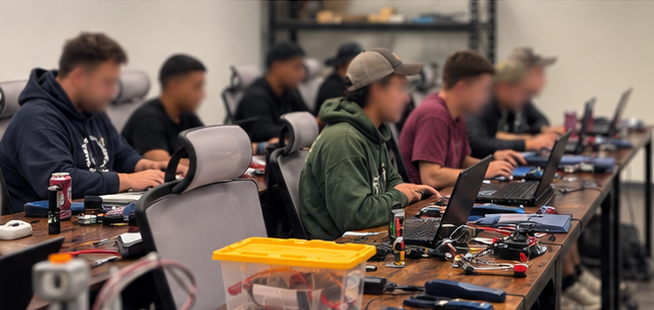
What FFF-301 Teaches
The course covers three skills that work together.
Additive manufacturing. Students design parts in Autodesk Fusion 360 and print them in PLA, PETG, ASA or TPU, choosing the material for the structural, flexible or outdoor-exposure requirement. Graded work includes mounts, arm replacements and avionics or battery trays, followed by a capstone part each student selects for a fixed-wing or FPV airframe.
Reverse engineering. When a part is broken, discontinued or unavailable, the unit needs a way to recreate it. Students measure physical hardware with calipers, model it with tolerances for the intended fit, and print it. The hardware includes flight controllers, GPS modules, motors and airframe hardpoints.
QA/QC. A printed part is only useful if its maker can show it meets the requirement. Students inspect each part against defined criteria: critical dimensions, functional fit and a classroom proof load. They then accept, rework or reject it.
Students work from fixed-wing and FPV airframes and representative UAS components, not a single platform. Parts made in class are training articles.
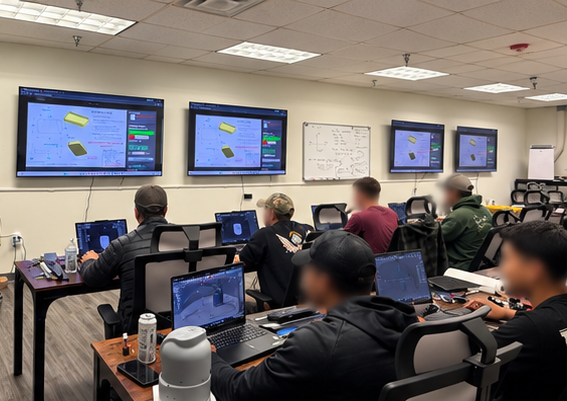
What the Unit Has at the End
A unit that finishes FFF-301 does not just have students who have used a 3D printer. It has operators who can recreate a failed component and check it against defined criteria, which shortens the path back to service.
That is the principle behind everything we teach. As we wrote in Operator Self-Sufficiency, a program is only as good as its organic repair capability. Your UAS Program Is One Component Failure Away from Mission Stoppage explains where programs break, and The True Cost of a Contractor-Dependent UAS Program estimates what that dependence costs.
Each student drafts a unit-level sustainment plan covering filament stock, printer maintenance intervals and print queue priority. The multi-material printers, filament and measuring tools used in class stay with the student.
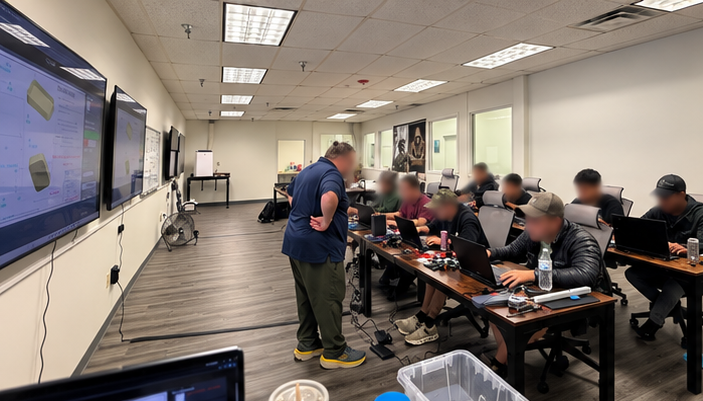
Bringing FFF-301 to Your Unit
FFF-301 runs as a resident course for cohorts of 3 to 20 students. Units that already own a printer can take the instruction alone. If you run a unit lab, innovation cell or training shop, start with a conversation about what your aircraft need.
View Field Fabrication and Sustainment courses Request a training proposal